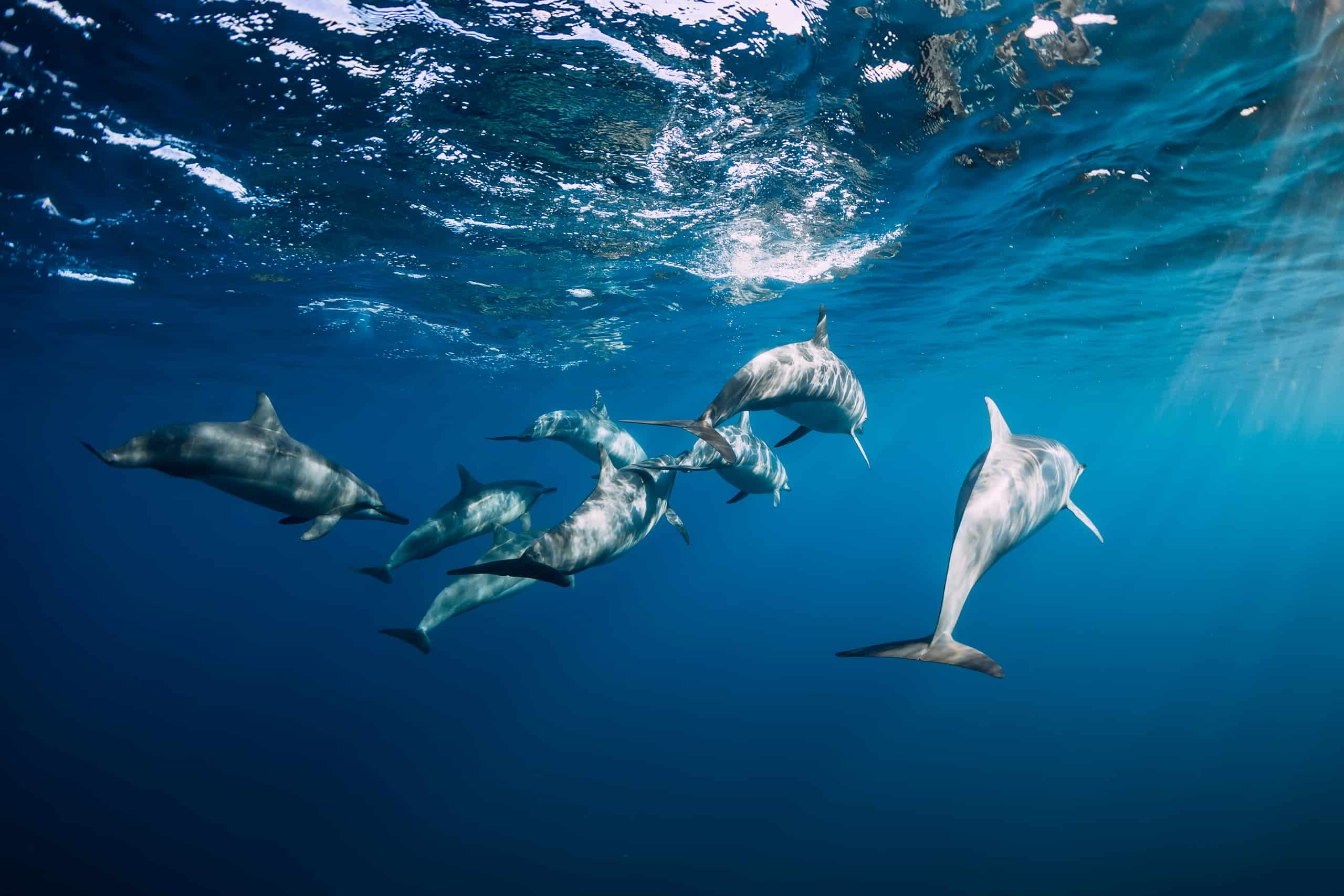
You have probably seen it on social media. Someone in a turquoise sea, a dolphin cutting past just below the surface, the light refracting through warm water. It looks extraordinary. And then, almost immediately, someone else posts a response saying it is wrong, harmful, exploitative, and that you should be ashamed for even wanting to do it.
If you have ever wanted to swim with wild dolphins and felt guilty about it, you are not alone. And if you have seen the criticism and wondered whether it actually applies to every dolphin encounter everywhere in the world, you are asking exactly the right question.
The honest answer is: it depends entirely on how it is done. Not all dolphin tourism is the same, and treating it as a single category is where most of the debate goes wrong. The question is not whether to swim with wild dolphins. The question is under what conditions, by whom, and to what end.
This post looks at what the science says about the impact of dolphin tourism on wild populations, what the difference between harmful and ethical interaction actually looks like in practice, and how the Zanzibar Dolphin Research and Marine Conservation Project is working to make dolphin tourism in one of the world’s least regulated hotspots better for the animals and the communities that depend on them.
Why People Want to Swim With Dolphins in the First Place
Before getting to the science, it is worth being honest about the human side of this. The desire to be close to a wild dolphin is not frivolous. Dolphins are among the most intelligent, socially complex, and communicative animals on earth. They form lasting bonds, grieve their dead, teach their young, and play for what appears to be the sheer pleasure of it. The appeal of sharing water with one is not vanity. It is a form of connection with the natural world that most people rarely get to experience.
Research published in the Journal of Ecotourism found that people who swim with wild dolphins in regulated settings show significantly higher levels of engagement with dolphin conservation than those who simply observe from a boat or a beach. The encounter creates an emotional connection that often translates into real pro-environmental behaviour. People who have been in the water with wild dolphins are more likely to care about protecting them.
That is not an argument for doing it carelessly. It is an argument for doing it right. Because the same research is unambiguous that unregulated dolphin tourism causes genuine harm.
What Unregulated Dolphin Tourism Actually Does to the Animals
The scientific literature on the behavioural impact of dolphin tourism is now substantial, and the findings are consistent. When tourist boats operate without guidelines, the effects on dolphin populations are measurable, significant, and cumulative.
A peer-reviewed study published in Marine Mammal Science, looking specifically at the waters off Zanzibar’s Kizimkazi coast, found that in the presence of tourist boats, dolphins were significantly less likely to remain in resting or socialising states and substantially more likely to begin travelling or foraging. Their natural behavioural budgets were compressed by the presence of human activity. Resting, feeding, and socialising all decreased. Travelling increased. The dolphins were, in short, being pushed through their day rather than living it.
This matters because dolphins are not machines. Resting is not optional. Spinner dolphins, one of the two resident species in Zanzibar’s Menai Bay, are nocturnal hunters. They feed in deep water at night and depend on resting in sheltered inshore bays during the morning hours to recover. This is precisely when tourist boats arrive. When a pod of boats converges on resting dolphins and forces them to move, those animals are losing the recovery time their biology requires. Do that every single morning, across an entire tourist season, for years, and the population-level consequences become serious.
In Zanzibar specifically, researchers working in Menai Bay documented up to sixteen tourist boats descending on a single dolphin pod simultaneously. Tourists jump directly into the water on top of the animals. Boats chase pods at speed to keep tourists in proximity. Mothers and calves are separated in the chaos. Dolphins that would otherwise use Menai Bay as a rest site are being pushed further offshore. Researchers who have worked in the area over years have noted that dolphins are increasingly shy around boats, coming to the surface less often, and in some cases changing their range patterns entirely in response to chronic disturbance.
The fear, and it is a well-founded one, is that what happened to dolphin populations in other heavily touristed areas could happen in Zanzibar. In several locations around the world, unregulated dolphin tourism has preceded population decline and, ultimately, the departure of the animals altogether, taking with it both the ecological benefit they provided and the tourism economy that depended on them.

The Zanzibar Context: Why This Particular Place Matters
Zanzibar is not a marginal case. It is one of the most visited dolphin tourism destinations in the Indian Ocean, and it is, according to researchers who have studied it directly, one of the least regulated in the world.
The Menai Bay Conservation Area covers 470 square kilometres of ocean off Zanzibar’s southwest coast and is legally designated as a marine protected area. In practice, enforcement of any meaningful code of conduct for dolphin tourism is close to non-existent. There are no government-mandated rules on approach distances, time limits, vessel numbers, swimming behaviour, or interaction protocols. Boat drivers, many of whom know the dolphins as neighbours and livelihoods rather than wildlife, are operating without the training or tools to do anything differently even if they wanted to.
This is not a failure of local people. It is a failure of policy, and policy requires data. Without a systematic, long-term record of how dolphin behaviour is changing in response to tourism, there is nothing to take to government, nothing to build regulations around, and nothing to hold operators accountable to. That data gap is precisely what the Zanzibar Dolphin Research and Marine Conservation Project was designed to fill.
What the Project Actually Does
The project was established in 2013 in Kizimkazi, developed in partnership with the University of Dar es Salaam. Its core purpose is to generate the kind of reliable, longitudinal data on dolphin behaviour and human interaction that can underpin real conservation policy. This is not a general research programme with a vague conservation mission. It has a specific, practical goal: to give Tanzanian authorities the evidence they need to regulate dolphin tourism effectively.
Every day, volunteer researchers head out onto Menai Bay with the research team. On the water, the work is methodical. Volunteers record the number of dolphins in a pod, their behavioural state, the number of tourist boats present, the behaviour of those boats in relation to the animals, and any signs of distress or disruption. The same locations are surveyed consistently over time, building a dataset that captures change across seasons, years, and shifts in tourism intensity. This time-series methodology is what gives the data its value. A single day’s observation tells you very little. A decade of consistent observation tells you a great deal.
Volunteers also contribute to coral reef health surveys in the broader Menai Bay area, adding an additional layer to the ecological picture. Coral bleaching driven by rising ocean temperatures is already affecting Zanzibar’s reefs, and monitoring its progression is part of understanding the full health of the ecosystem the dolphins depend on. You can read more about the Zanzibar programme and its full scope of research here.
The Ethical Boat Driver Programme: Changing the Industry From Within
Research alone does not change anything on the water. The project recognised early that collecting data on harmful behaviour while doing nothing to address it was not enough. So alongside the scientific monitoring work, the team developed the Ethical Boat Driver Training Course, working directly with the local operators who run dolphin tours from Kizimkazi.
The training covers dolphin biology and behaviour, the specific ways that irresponsible driving affects the animals, and safe approach protocols in line with World Cetacean Alliance guidelines. These include maintaining a minimum 20-metre distance from pods, driving parallel to the dolphins’ direction of travel rather than cutting them off, and reducing engine speed in proximity to the animals. Boat drivers who complete both a theory and practical examination receive certification as Ethical Boat Drivers.
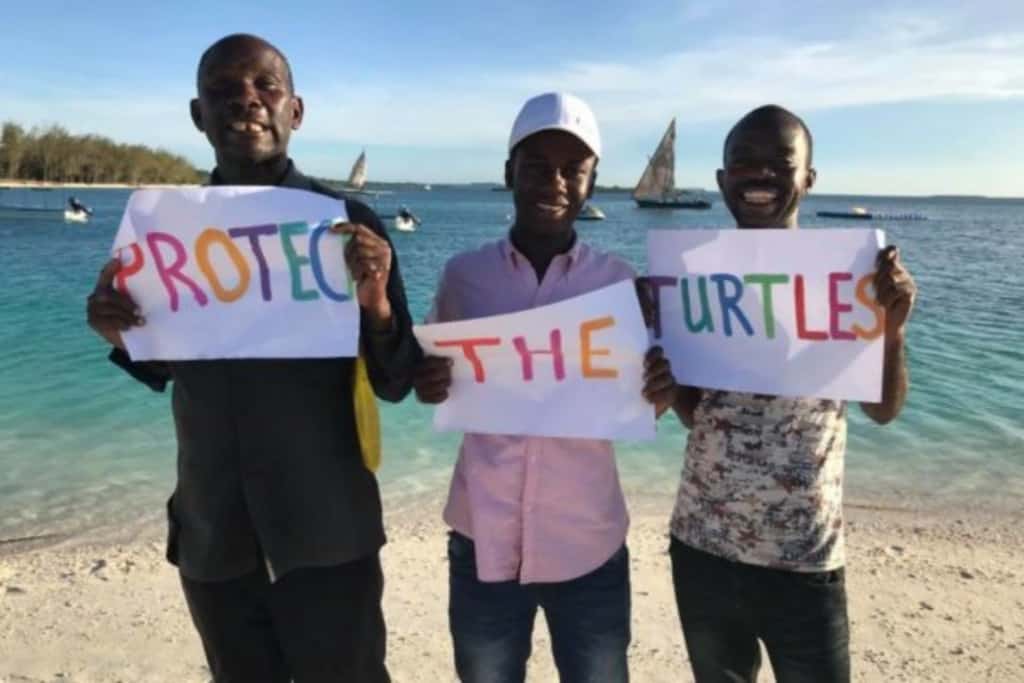
This led to the establishment of Kizimkazi Ethical Dolphin Tours, a community-run operator whose drivers are all trained through the programme. The project now has 25 certified boat drivers from the villages of Kizimkazi Dimbani and Kizimkazi Mkunguni. These are not outsiders imposing conservation standards on a local community. They are members of that community who have chosen to operate differently, and whose businesses reflect the values that the research project has helped to build.
The significance of this cannot be understated. Dolphin tourism is not peripheral to Kizimkazi’s economy. It is the economy. Asking those communities to stop is not realistic or fair. Asking them to do it better, giving them the knowledge and the tools to do so, and creating a market advantage for the operators who comply, is how conservation actually works at the community level.
So What Does Ethical Swimming With Dolphins Actually Look Like?
This is the practical question that sits at the heart of the debate. The distinction between harmful and ethical dolphin interaction is not philosophical. It is specific, observable, and teachable.
Ethical interaction is defined primarily by who is in control. In harmful dolphin tourism, the tourist is in control. Boats chase the animals. People jump in wherever the dolphins happen to be. The encounter is engineered to deliver a product to the paying customer regardless of what the animals are doing or what they need. In ethical dolphin interaction, the dolphins are in control. Boats approach slowly and at a careful distance. Entry into the water is passive. The dolphins can approach or not approach as they choose. If they are resting, feeding, or moving with purpose, the encounter does not happen. Observers read the animals’ behaviour and respond to it rather than imposing on it.
The difference in experience from the human side is also profound. Being in water with a wild dolphin that has chosen to approach you, that is curious rather than stressed, that circles and investigates on its own terms, is an entirely different experience from being in water with a panicked pod trying to escape a chase. One stays with you. The other, if you are paying attention, leaves you feeling uncomfortable about what just happened.
Volunteers on the Zanzibar Dolphin Project swim with the animals. That is part of the programme and part of what makes it extraordinary. But they do so as part of a research team that reads the animals’ behaviour before any entry into the water, that operates under ethical protocols developed from years of studying these specific populations, and that is present specifically because it cares what happens to those dolphins long after the swim is over.
What the Data Is Building Toward
The project’s long-term goal extends beyond individual encounters and individual operators. Zanzibar currently has no government-enforced regulations governing dolphin tourism. The research being conducted in Menai Bay is the evidence base that could change that. Every data point collected by volunteers contributes to a dataset that researchers and conservation advocates can take to the Tanzanian government to make the case for enforceable standards: approach distances, time limits, maximum vessel numbers per pod, and prohibitions on chasing and direct contact when animals are resting or feeding.
This is how marine conservation policy is actually made. Not through campaigning or publicity, but through data. Long-term, consistent, peer-reviewed data that demonstrates what is happening, how it is affecting the animals, and what specific interventions would reduce the harm. The Zanzibar project has been building that record since 2013. The volunteers who join it are not spectators. They are the data collectors on whose work that case will eventually rest.
The World Cetacean Alliance, which has recognised the importance of the research being conducted in Menai Bay, has described Zanzibar’s dolphin tourism situation as among the most urgent in the region precisely because of the scale of unregulated activity and the documented behavioural impact on resident populations.
Back to the Original Question
Should you swim with wild dolphins?
The blanket answer in either direction misses what actually matters. Captive dolphin encounters, where animals are held in pens and trained to interact with tourists using food deprivation, are a categorically different issue and one where the harm is well-documented and the ethical case against is strong. Wild dolphin tourism in unregulated settings where boats chase stressed animals and tourists jump on top of them causes measurable harm and should be avoided. These are legitimate criticisms of specific forms of dolphin tourism. They are not a verdict on the whole idea.
Wild dolphin interaction done ethically, on the animals’ terms, by people who are present because they care about the outcome for the dolphins, is a different thing entirely. It can be extraordinary for the human involved. It can contribute directly to conservation outcomes that benefit the animals. And it can, as the research from Mozambique and elsewhere shows, create the kind of genuine conservation engagement that changes how people think and act long after they have dried off and gone home.
The Zanzibar Dolphin Research and Marine Conservation Project is not perfect dolphin tourism. It is something more valuable than that. It is a sustained, scientific effort to understand what is happening to one of the Indian Ocean’s most important resident dolphin populations, to change the practices of the industry that affects them, and to build the evidence that will eventually give those animals the legal protection they currently lack. The people who join it get to be part of that. They also, when conditions and behaviour allow it, get to be in the water with wild dolphins in one of the most beautiful corners of the ocean on earth.
That is not something to feel guilty about. It is something to do thoughtfully, with the right people, for the right reasons.
The Zanzibar Dolphin Research and Marine Conservation Project runs year-round with flexible start dates. Volunteer programmes start from two weeks. View the full programme details here, or get in touch with the Marine Impact team to find out more.