Marine Conservation Volunteering in South Africa
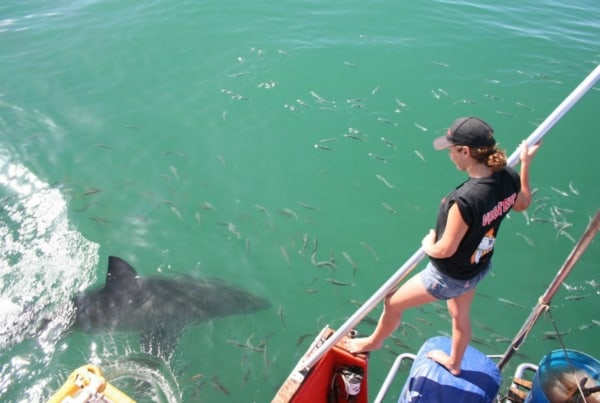
South Africa sits at the intersection of the Indian and Atlantic Oceans, producing one of the most biodiverse and ecologically significant marine environments on earth. Marine Impact’s South Africa programme is based in Gansbaai in the Western Cape — the great white shark capital of the world, and one of the most important sites for apex predator research anywhere on the planet.
Volunteers join a professional marine science team conducting long-term population monitoring of great white sharks. This is not a wildlife tour or a dive holiday dressed up as conservation. The research you contribute to has been running continuously for years, and the photo-identification database built with volunteer effort is one of the most comprehensive records of great white shark populations in existence. The science is credible, peer-reviewed, and directly relevant to conservation policy for one of the world’s most vulnerable apex predators.
What Will You Be Doing?
The core research methodology in Gansbaai involves boat-based survey expeditions into Walker Bay, where volunteers observe, photograph, and record individual shark encounters. Your primary research task is photo-identification: capturing high-quality images of dorsal fins and body markings that allow scientists to identify and track individual animals over time and across seasons. Each sighting you record adds to a long-term dataset that tracks population trends, habitat use, and the impact of ecological pressures including the well-documented arrival of orca predators in the region from 2017 onwards.
Cage diving forms part of the research methodology in South Africa. The cage allows close-range, surface-level observation of individual sharks, producing clearer identification photographs and behavioural data than surface observation alone. This is not a tourist activity — it has a defined scientific purpose. No scuba diving qualification is required.
Typical research activities include:
- Boat-based shark survey expeditions in Walker Bay
- Photo-identification of individual great white sharks using dorsal fin and body marking photography
- Cage diving for close-range behavioural observation and ID photography
- Surface surveys recording shark behaviour, size estimates, and environmental conditions
- Bait and camera deployments to monitor shark presence across survey zones
- Data entry, photo-ID analysis, and population database management
- Afternoon skills sessions covering shark biology, identification techniques, and research methodology
Who Is This For?
The South Africa programme suits anyone with a serious interest in shark conservation and marine research — from marine biology students and recent graduates building field credentials, to career professionals using a sabbatical to contribute to conservation science that matters. No prior research experience is required. Full scientific training is provided on arrival and all fieldwork is directly supervised by qualified field scientists.
No diving qualification is required to participate in the core shark research programme. Cage diving is conducted at the surface using supplied breathing equipment. If you hold a scuba certification, additional in-water reef survey work may be available alongside the shark research.
How Long Are the Placements?
Placements run from two weeks. New cohorts start every Monday throughout the year. Longer placements are strongly encouraged — the more time you spend in the field, the more you contribute to the research and the richer your own scientific understanding becomes. Get in touch to discuss your dates or requirements.
South Africa vs Other Marine Impact Destinations
South Africa is the most specialist of Marine Impact’s three destinations, with research focused tightly on great white shark population monitoring. Zanzibar offers the broadest daily research variety — dolphin surveys, reef monitoring, and turtle conservation running in parallel. Mozambique offers the most diverse megafauna encounters, with whale sharks, manta rays, and humpback whales alongside coral reef research. If sharks are your primary motivation, South Africa is the right destination. Get in touch and we will help you work out the best fit.