EXPLORE DOLPHIN RESEARCH PROJECTS
Dolphins are among the most intelligent and fascinating creatures in the ocean. Highly social, acutely aware of their surroundings, and capable of complex communication, they play a vital role in maintaining the health of marine ecosystems. Yet despite this, dolphin populations around the world are under serious threat — from bycatch in commercial fishing gear, habitat degradation, noise pollution, and the gradual loss of prey as ocean temperatures rise.
Understanding dolphin behaviour, population dynamics, and habitat use is essential to protecting them effectively. That’s where you come in. Marine Impact’s dolphin research programmes place volunteers alongside experienced marine biologists conducting genuine, ongoing research. This is not whale watching with a conservation label attached — it is structured, scientific fieldwork that directly informs conservation strategy.
What will you do?
As a dolphin research volunteer with Marine Impact, your days are spent in the field collecting data that matters. Typical activities include:
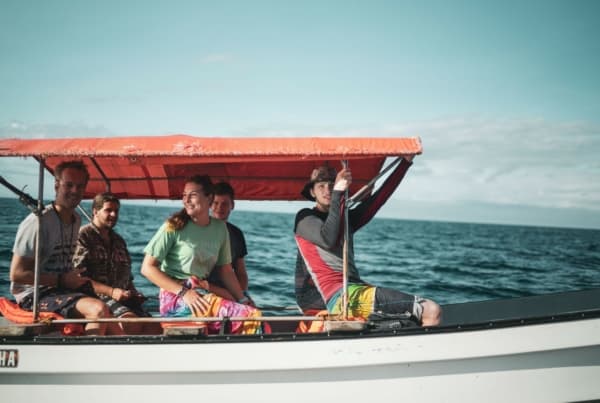
- Boat-based surveys tracking dolphin pods and recording behaviour, group size, and movement patterns
- Photo-identification cataloguing — building individual ID records from dorsal fin photographs to track specific animals over time
- Acoustic monitoring to study dolphin communication and the impact of noise pollution
- Data entry and analysis, contributing to long-term population databases
- Snorkelling and free-diving observations in designated research zones
All fieldwork is conducted ethically and in line with strict research protocols. Dolphins are observed in their natural habitat — never fed, handled, or interfered with. Marine Impact takes responsible wildlife interaction seriously.
Who is this for?
Our dolphin research programmes are open to volunteers from all backgrounds. You do not need a marine biology degree or prior research experience — full training is provided. What you do need is a genuine commitment to conservation, a willingness to get involved in physical fieldwork, and ideally a basic comfort in the water. Some programmes require or offer the opportunity to gain a PADI Open Water diving qualification, which can be arranged locally.
These programmes attract gap year students, university undergraduates seeking field experience, career changers looking to move into conservation, and professionals taking a meaningful sabbatical. What unites them is a desire to contribute to something real.
Why Marine Impact?
Marine Impact was founded by the team behind African Impact — one of Africa’s most established and respected volunteer organisations — in partnership with leading marine scientists including Dr Gretchen Goodbody-Gringley, a reef ecologist with a PhD from Harvard University. That combination of scientific credibility and operational experience in running volunteer programmes means the work you contribute to is both rigorous and well-supported.
Our dolphin research projects are based in some of the most biodiverse marine environments on the planet. Zanzibar, off the coast of Tanzania, offers year-round dolphin activity in warm Indian Ocean waters, with resident spinner and bottlenose dolphin populations that have been studied continuously for years. This continuity matters — the longer the dataset, the more valuable the research.