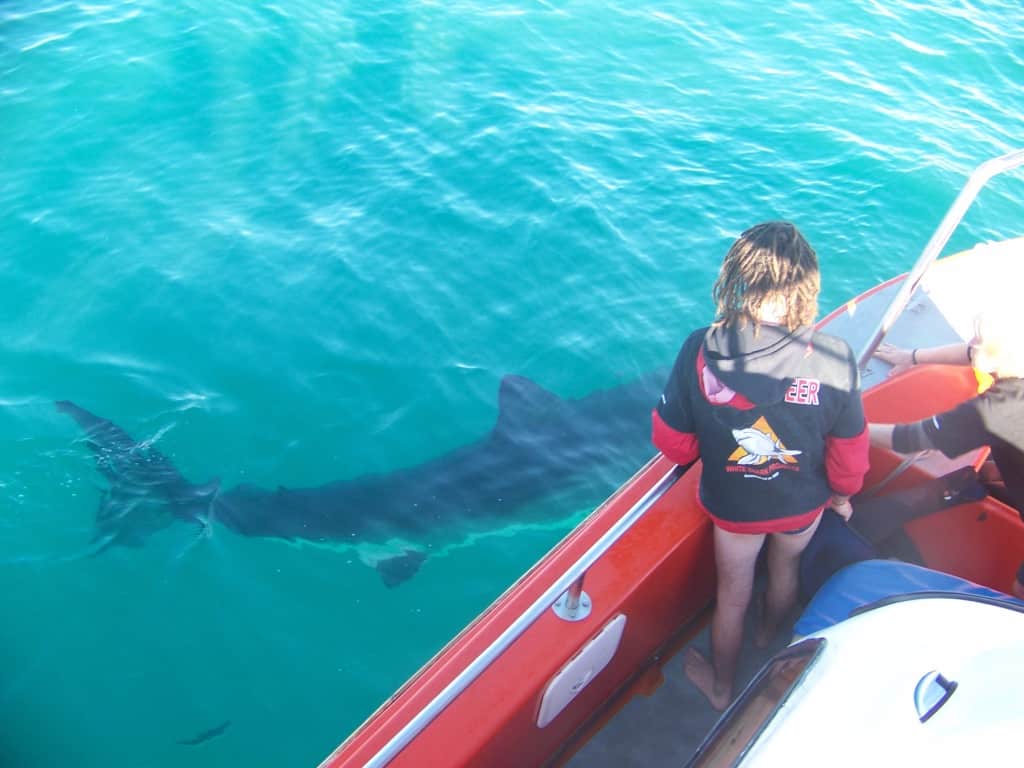
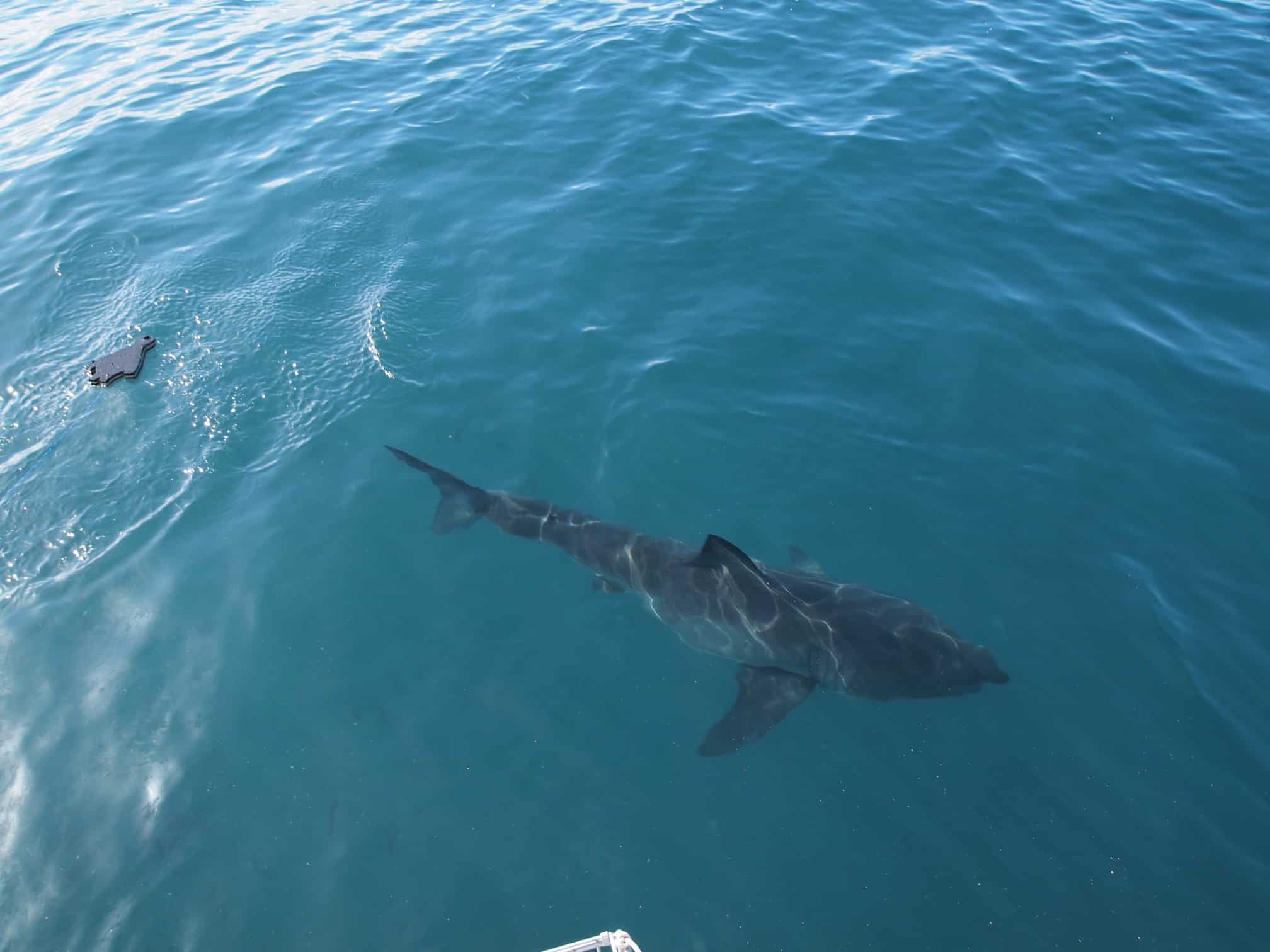
Great white sharks in South Africa once made Gansbaai the great white shark capital of the world. Cape Town’s False Bay logged over 300 sightings in a single year. Today those same waters are empty. Since 2019, not one great white shark has appeared across eight monitored beaches in False Bay. Two killer whales caused this shift — and what they have done to South Africa’s marine ecosystem is one of the most dramatic stories in modern marine science.
Two orcas named Port and Starboard hunted great white sharks systematically along South Africa’s coastline. Their arrival drove the sharks from waters they dominated for decades, triggering ecosystem change that scientists are still working to understand. This is what happened — and why it matters.
Meet Port and Starboard — The Orcas Reshaping South Africa’s Oceans
Port and Starboard are adult male orcas with a rare distinction — both have collapsed dorsal fins, drooping left and right, which gave them their nautical names. They belong to a distinct ecotype found in South African waters, with flatter teeth than northern hemisphere orcas. Researchers first spotted them near Lüderitz, Namibia, in 2009.
Before 2015, orcas in False Bay targeted marine mammals. Port and Starboard changed that pattern. Great white sharks began washing up on South African beaches with their livers removed — a precise feeding strategy researchers had not seen in the region before. Shark livers are dense with lipids and deliver enormous caloric value. Port and Starboard developed a two-stage attack: they ram the shark to stun it, then flip it upside down to induce tonic immobility — a paralysed, trance-like state. With the shark helpless, the orcas grip the pectoral fins and force open the body cavity to extract the liver.
By 2017, eight great white sharks washed ashore after orca attacks. Seven had their livers removed. The great white sharks of South Africa fled.
A Solo Kill in Two Minutes — Science Rewrites the Rules
Researchers assumed that hunting great white sharks required both orcas working together. In June 2023, that assumption collapsed.
Near Seal Island off Mossel Bay — 400 kilometres east of Cape Town — Starboard killed a juvenile great white shark alone in under two minutes. He gripped the shark’s left pectoral fin, thrust forward repeatedly, and eviscerated it. He then surfaced with the shark’s liver in his mouth.
Researchers published the findings in the African Journal of Marine Science in March 2024. Lead researcher Dr Alison Towner of Rhodes University confirmed it as the first recorded solo orca kill of a great white shark. Starboard had developed individual hunting skill far beyond what cooperative behaviour could explain.
Why Great White Sharks Left South Africa’s Western Cape
Great white sharks in South Africa are not avoiding specific spots where Port and Starboard hunt. Long-term sighting data and satellite tagging reveal a large-scale retreat across the entire western Cape coast. Dr Towner compares it to wild dogs in the Serengeti avoiding lion-held territories — a fear response covering hundreds of kilometres, not a local patch.
Cape Town’s False Bay recorded over 300 great white shark sightings across eight beaches in 2011. Since 2019, sightings stand at zero. In Gansbaai, counts dropped sharply from 2017 and never recovered. No new aggregation site has appeared. The great white sharks of South Africa have disappeared from their historic range — and nobody knows where they went.
The Ecosystem Cascade — What Happens When Apex Predators Disappear
Great white sharks in South Africa sit at the top of the food web. Remove them and the effects reach every level below.
Bronze whaler sharks moved into territory that great whites had held. Great whites normally keep bronze whalers in check. Without that control, bronze whaler numbers grew — only for Port and Starboard to start hunting them too. In February 2023, the orca pair killed at least 17 sevengill sharks off Pearly Beach in a single day.
Great whites also regulate Cape fur seal populations along this coast. Without great whites present, seals range more freely — raising predation pressure on critically endangered African penguins and competing for the small fish both species need. Abalone poaching stripped the kelp forests that underpin the nearshore food web from below. The system now faces pressure from above, below, and throughout at once.
What Is Driving Port and Starboard?
Researchers have no firm answer. Port and Starboard are likely older males. Some believe they discovered that great white shark livers deliver extraordinary caloric returns — a single large liver can weigh hundreds of kilograms. The energy payoff justifies the risk of hunting one of the ocean’s largest predators.
Dr Towner has suggested that broader ocean pressures — industrial fishing reducing prey availability, climate change shifting species distributions — may have pushed the orcas toward targeting sharks. The causal links remain unconfirmed. Read the ScienceDaily coverage of the published research or the Natural History Museum summary for the full findings.
The Human Cost — Tourism and a Changed Coastline
Gansbaai’s shark cage diving industry depended entirely on great white sharks in South Africa. That industry has effectively ceased. Boat operators, guides, and local accommodation providers lost their livelihoods. Discovery Channel’s Air Jaws series — famous for breaching great whites in False Bay — lost its subject entirely.
Great white sharks received legal protection in South African waters in 1991. Decades of conservation work brought populations back from severe fishing pressure. Port and Starboard reversed the geographic footprint of that recovery in under a decade — not through human activity, but through one of the most extraordinary predator-prey dynamics ever recorded.
Why Volunteer Marine Research Matters More Than Ever
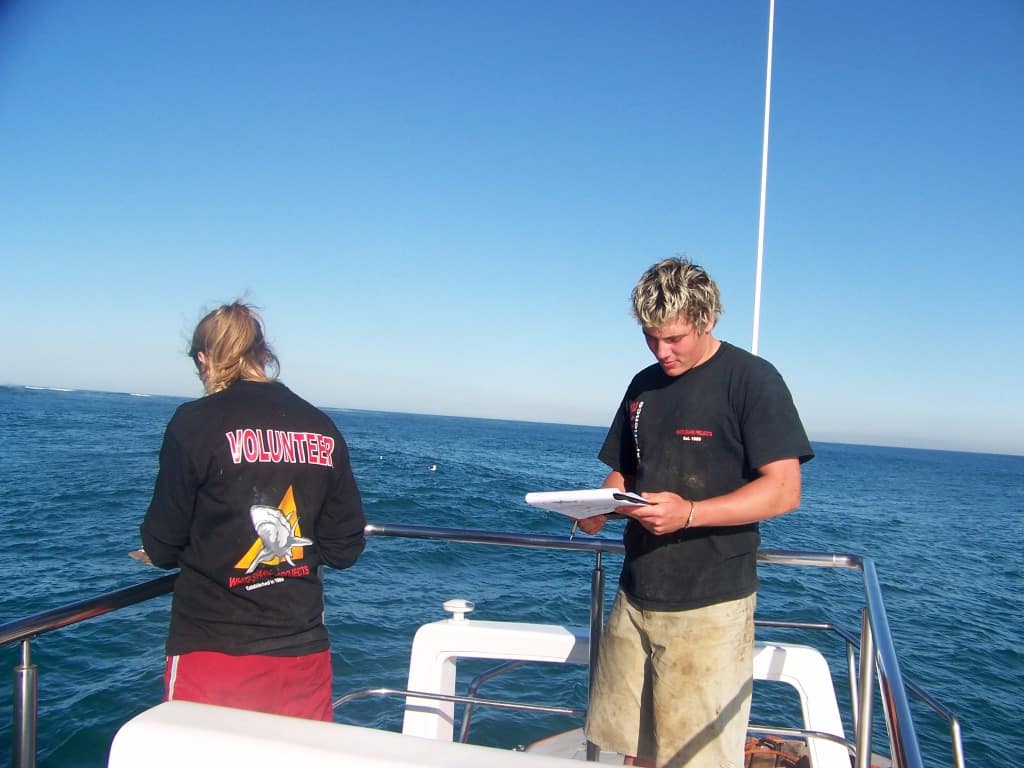
Detecting the decline of great white sharks in South Africa took years of continuous monitoring. Tagging programmes, photo-identification databases, and regular sighting counts across multiple sites built the picture. Much of that data came from volunteer researchers working alongside professional scientists.
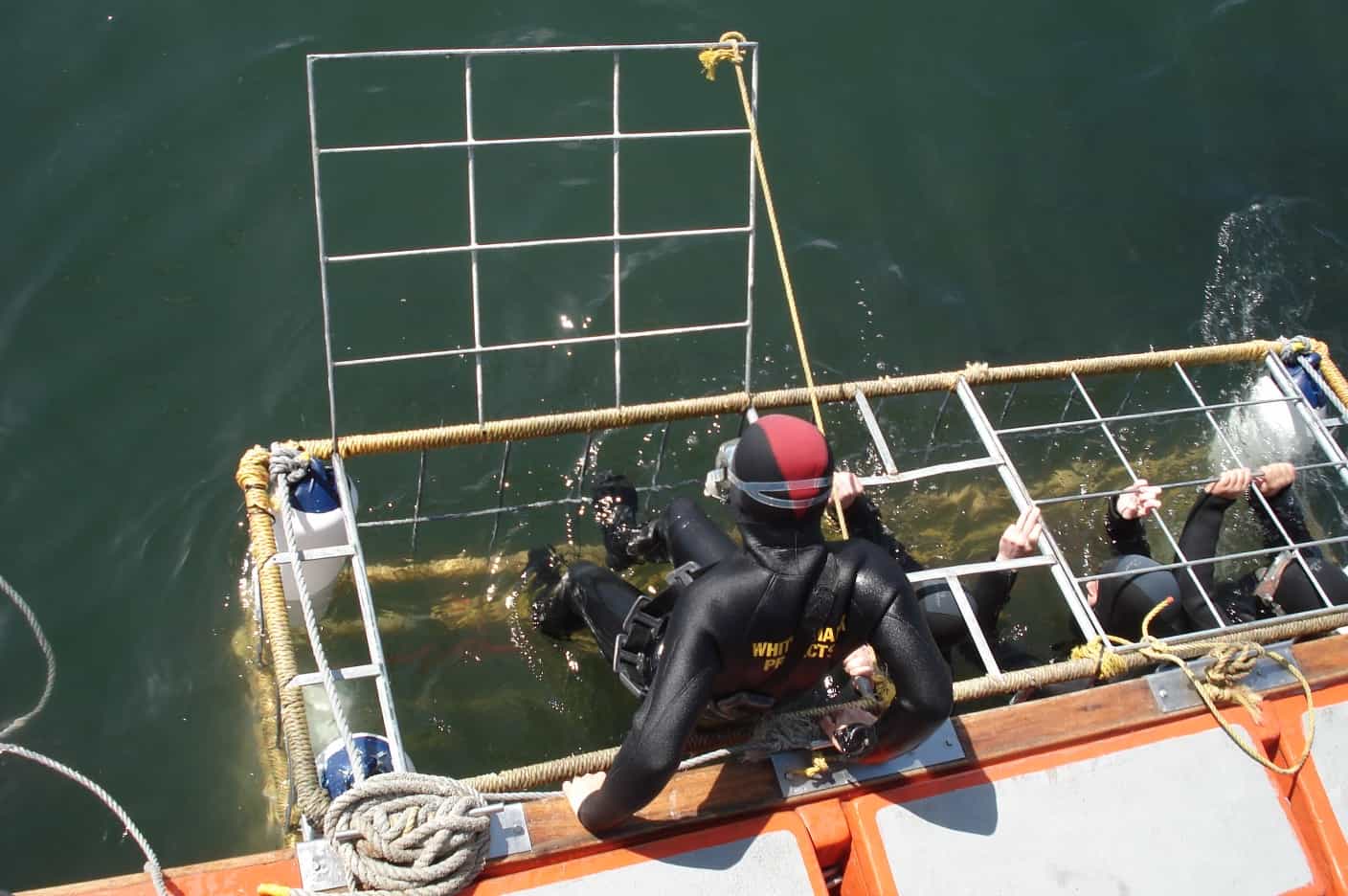
Marine Impact runs shark conservation volunteer programmes in Gansbaai, contributing to the long-term population monitoring that makes detecting change at this scale possible. Volunteers join research teams on boat-based surveys, record species presence, and build population databases that feed directly into peer-reviewed science. The questions scientists now ask about where the great whites went — and what replaces them — rest on that data foundation.
What Happens Next for Great White Sharks in South Africa?
Scientists do not know. No major new aggregation site has emerged. Port and Starboard continue ranging from Cape Town to Namibia, hunting a growing range of species. Starboard’s solo kill in 2023 shows their skills are advancing, not slowing.
South Africa’s western Cape coast is changing. The great white sharks that defined these waters for decades have retreated. What fills that ecological space — and whether science can track and respond to it — depends on sustained research and the volunteer monitoring that makes it possible.
Want to contribute to great white shark research in South Africa? Explore Marine Impact’s shark conservation volunteer programmes in Gansbaai.