
Every year, between the months of June and October, something extraordinary happens off the coast of Mozambique. Hundreds of humpback whales arrive in the warm Indian Ocean waters around Tofo and Barra on the Inhambane Peninsula. They come from Antarctica. They come to mate, to give birth, and to nurse their calves before the long return journey south. And for the volunteers and researchers based at Marine Impact’s Mozambique programme, their arrival transforms an already exceptional field research experience into something genuinely unforgettable.
This post covers the science behind the migration, what humpback whales are doing in Mozambique’s waters, the best time of year to see them, and how the research our volunteers contribute to is building a clearer picture of this population’s behaviour and health.
Why humpback whales migrate to Mozambique
Humpback whales (Megaptera novaeangliae) are one of the great migratory animals on earth. The Southern Hemisphere population that passes through Mozambique spends the austral summer, roughly November to April, feeding in the rich, cold, krill-dense waters of Antarctica. As winter approaches and Antarctic waters cool further, they make one of the longest migrations recorded in any mammal species, travelling up to 8,000 kilometres north to reach the warm, shallow coastal waters of the East African coastline.
They do not feed during this migration. The entire journey, north to the breeding grounds and back south, is powered by fat reserves accumulated during their Antarctic summer. A mature humpback whale may lose up to a third of its body weight over the migration season. What drives them north is not food but reproduction. The warm, calm, relatively shallow waters of the Mozambique Channel provide the conditions they need to mate and for females to give birth and nurse calves that are not yet strong enough for Antarctic waters.
The stretch of coast around Tofo and Barra in Inhambane Province is one of the most significant humpback whale aggregation sites in the western Indian Ocean. The bathymetry of the area, shallow reefs dropping quickly to deeper water, creates the kind of coastal environment these animals favour for socialising and calf-rearing. The warm Mozambique Channel is also a key corridor for the broader East African population, with animals passing through on their way to and from breeding grounds further north.
The migration route: from Antarctica to the Indian Ocean
The humpback whales seen in Mozambique belong primarily to the Southern Hemisphere breeding stock designated as C1 by the International Whaling Commission, a population that winters along the East African coast from Mozambique and Tanzania north to the Arabian Sea. They depart Antarctic feeding grounds as sea ice advances in late autumn, travelling along the east coast of Africa in a loosely coordinated northward movement that sees the first animals typically arrive in Mozambican waters in late May or early June.
The southward return migration begins in September and October, with animals departing gradually as calves gain strength and the austral spring draws them back toward Antarctic feeding grounds. By November, the majority have left Mozambican waters. The peak presence, and the most intense social activity, including surface displays, song, and competitive group behaviour, occurs from July to September.
Individual animals do not necessarily return to the same specific stretch of coastline each year, though there is evidence of some site fidelity in both breeding males and females with calves. Photo-identification research, including work supported by volunteers at the Marine Impact research programme in Tofo, is helping to build a clearer understanding of individual movement patterns, return rates, and population connectivity along the East African coast.
What humpback whales do in Mozambican waters
The behaviours visible in Mozambican waters during peak season are among the most spectacular in the natural world. Humpbacks are famously active at the surface, and in these warm, calm waters they display almost continuously.
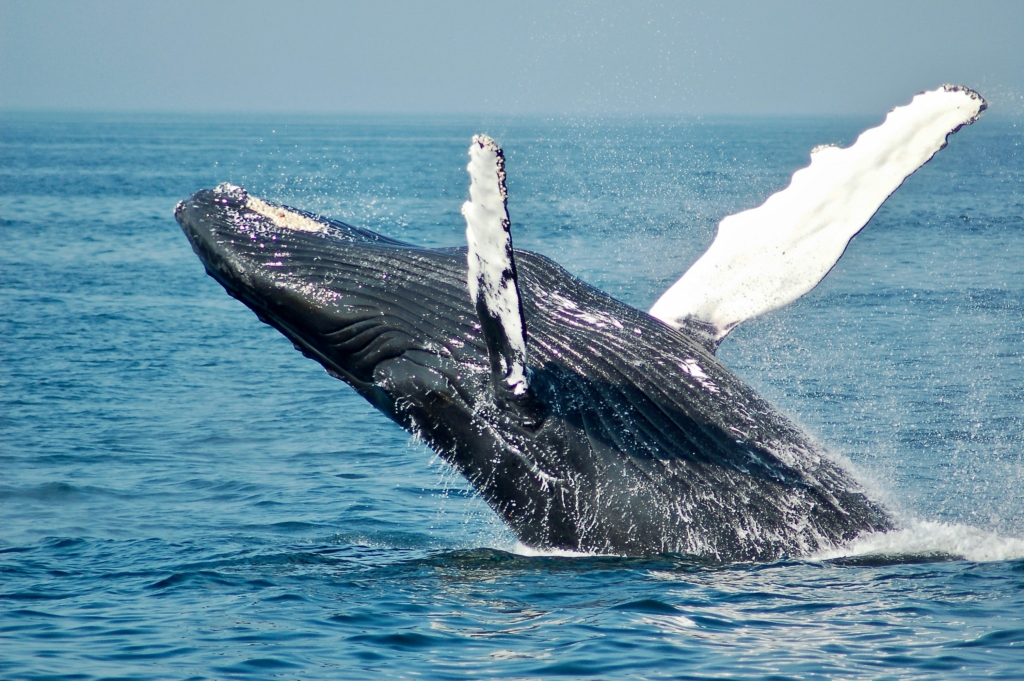
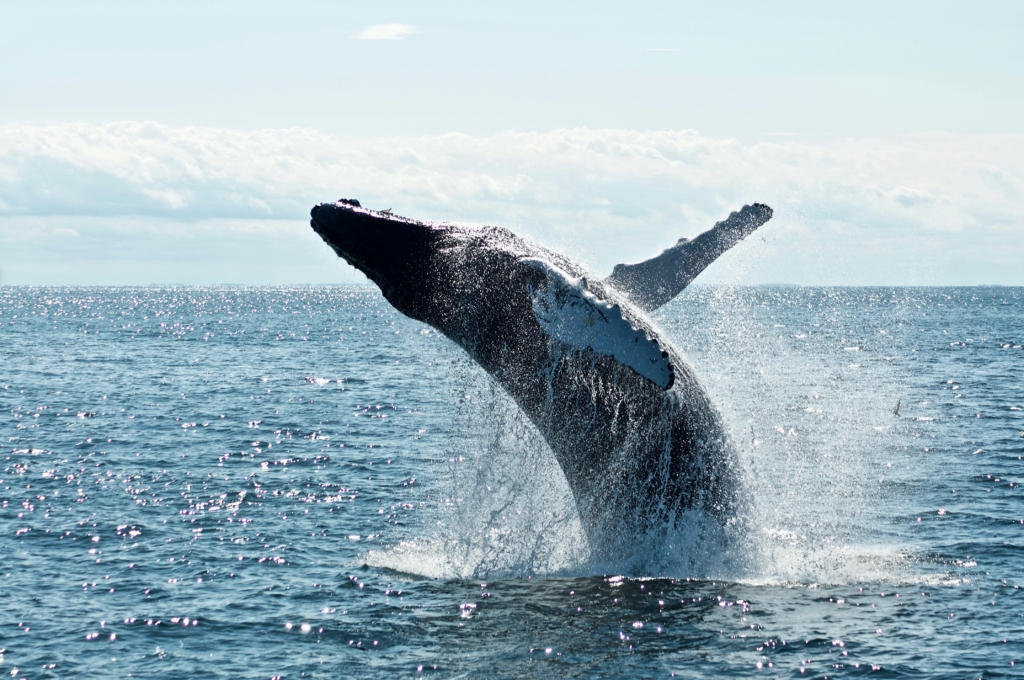
Breaching, the full or partial launch of the body out of the water, is common throughout the season, though its function is still debated. It may serve as long-distance communication, a display of fitness to potential mates, or parasite removal. Whatever the cause, a 40-tonne animal launching itself clear of the water at close range is an experience that requires no scientific context to be extraordinary.
Singing is primarily a male behaviour and occurs mostly underwater, but volunteers and researchers on surface surveys regularly hear it resonating through the hull of the boat. Humpback whale song is one of the most complex vocalisations in the animal kingdom, and the songs evolve across breeding seasons as new phrases spread through the male population.
Competitive groups, multiple males competing for access to a receptive female, produce dramatic surface activity including spy-hopping, tail-slapping, and sustained physical contact between animals. These groups can involve up to a dozen individuals and persist for hours.
Mother and calf pairs are among the most moving sightings. Calves are born in these waters at approximately four to five metres long and must gain strength and size before the southward migration. Watching a calf practise its first attempts at breaching, close enough to its mother to use her slipstream, is one of the defining memories of a Mozambique field season.
The best time to see humpback whales in Mozambique
The humpback whale season in Mozambique runs from approximately June to October, with peak activity and highest numbers from late July through September. This is the period when competitive groups are most frequent, when calf-rearing is at its most active, and when the sheer density of animals in the water around Tofo is at its greatest.
June is the start of the season. Sightings begin, but numbers are building. July through September is peak. October sees the season winding down as animals begin their southward return, though late-season sightings can be particularly memorable as the animals grow restless before departure.
The wider Marine Impact research programme in Mozambique runs year-round, so volunteers joining at any time can contribute to the full range of marine research activities including whale shark monitoring, manta ray surveys, and coral reef assessments. But for those for whom the humpback whale migration is a primary draw, July to September is the window to aim for.
What conservation status are humpback whales?
Humpback whales were heavily exploited during the commercial whaling era of the 20th century, with global populations estimated to have declined by over 90 percent at their lowest point. The International Whaling Commission moratorium on commercial whaling, introduced in 1986, enabled a substantial recovery, and humpbacks globally were downlisted from Vulnerable to Least Concern on the IUCN Red List in 2008.
However, recovery is uneven across populations. The Southern Hemisphere C1 stock, which includes the animals seen in Mozambique, is considered to be recovering well. But humpback whales continue to face threats from ship strikes, entanglement in fishing gear, noise pollution disrupting communication and navigation, and the longer-term effects of climate change on the Antarctic krill populations that form the foundation of their diet. Their status is not cause for complacency.
How research volunteers contribute to humpback whale science in Mozambique
The Marine Impact Mozambique programme operates from Africa’s first permanent marine observatory, using long-term time-series methodology to track changes in the ecosystem over years and decades. Humpback whale monitoring is an integral part of that research, conducted alongside the flagship whale shark and manta ray programmes.
Volunteer contributions to humpback whale research centre on three activities. Sighting records, logging date, location, group composition, behaviour type, and estimated number of individuals, build the population presence dataset that underpins understanding of seasonal patterns and year-on-year variation. Photo-identification using fluke photographs, which carry individually unique pigmentation patterns, allows specific animals to be tracked across seasons and potentially connected to sightings elsewhere on the East African coast. Behavioural coding during observation sessions contributes data on activity budgets, how much time animals spend in different behaviours, which is valuable for understanding how human activity, vessel traffic, and environmental conditions affect whale behaviour in the area.
The fluke: a humpback whale’s fingerprint
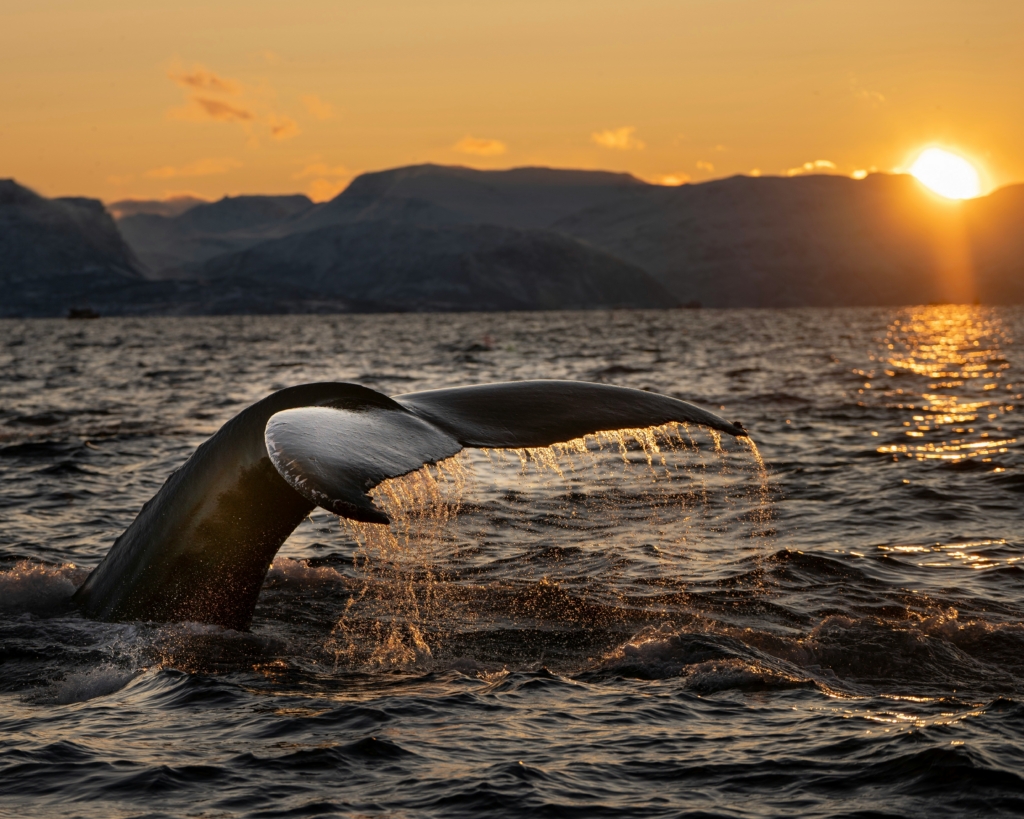
The underside of a humpback whale’s tail fluke is unique to each individual, carrying a specific pattern of black and white pigmentation, scarring, and trailing edge shape. Researchers use high-quality fluke photographs to build catalogues of individually identified animals, enabling population estimates, survival analysis, and movement tracking across breeding grounds and feeding areas.
When a volunteer photographs a fluke off Tofo and uploads it to the research database, that image can potentially be matched to a sighting in Antarctic feeding waters, off the coast of South Africa, or in breeding areas further north in the Indian Ocean. The global network of humpback whale photo-ID databases means that each new image has the potential to extend the movement record of a known individual by thousands of kilometres. That is what field research participation actually means in practice.
What to expect when humpback whales are around
Research days during humpback whale season in Tofo have a different quality to the rest of the year. The whale shark ocean safaris and manta ray research dives continue on their regular schedule, but the backdrop shifts. Surface scans that would normally focus on fin shapes or dorsals now also watch the horizon for the vertical column of vapour that marks a blow. Boat journeys between research sites are interrupted by proximity to surfacing groups. The sound of the sea changes when humpbacks are close.
For volunteers joining during peak season, the whales become part of the daily research environment rather than occasional highlights. A morning whale shark safari might produce both species simultaneously, which is a combination available in very few places on earth. An afternoon spent on a surface survey may involve an hour stationary beside a mother and calf, close enough to hear the breathing, close enough to watch the calf investigate the boat with the flat curiosity that characterises young cetaceans.
It is one of the most extraordinary field research environments available to volunteers anywhere on the planet. If you want to experience it, the window is June to October. The earlier you book, the better your choice of placement dates during peak season.
Browse the Mozambique programme, read our honest guide to volunteering with whale sharks in Mozambique, or get in touch to discuss dates and placements for humpback whale season.