Turtles come up in almost every enquiry about Zanzibar. It makes sense. Green and hawksbill turtles live in Menai Bay, and the idea of contributing to their protection is a big part of what draws people to marine conservation work. The honest answer about what that looks like in Zanzibar is more specific than most people expect.
What the Zanzibar programme is actually built around
Marine Impact’s Zanzibar programme has run continuously since 2013 in partnership with the University of Dar es Salaam, and it is built around resident spinner and bottlenose dolphins. Volunteers track dolphin pods, monitor how tourism boats affect them, and run coral reef health surveys across Menai Bay. That is the core of the programme, and it is where most of a placement’s time goes.
Where turtles show up in that work
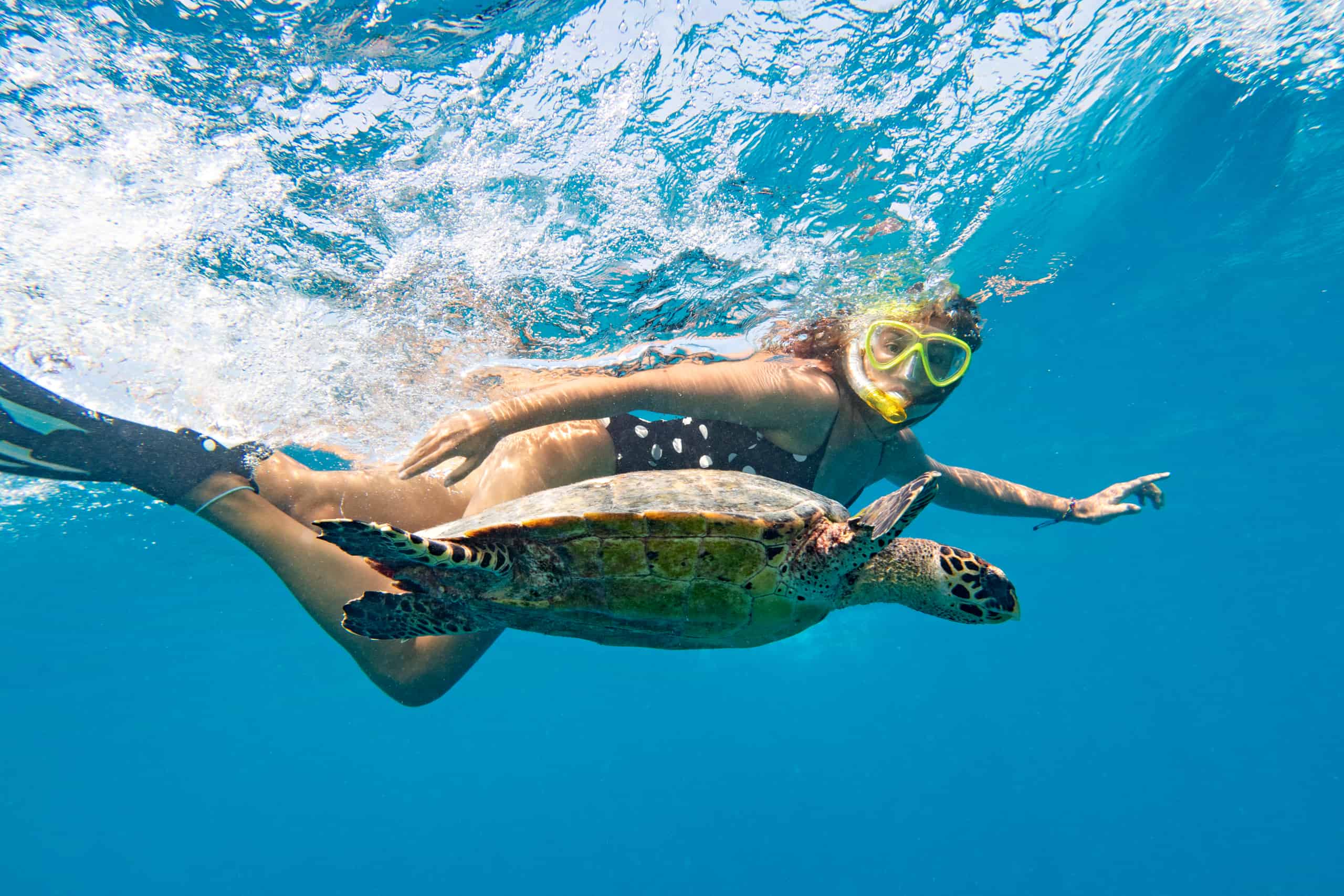
Turtles are part of the picture rather than the centre of it. During reef surveys, volunteers record green and hawksbill turtles when they appear, noting behaviour, size and location alongside the fish and coral data being collected. October to February is peak nesting season in the region, and sightings tend to pick up through those months. What you will not find in Zanzibar is a dedicated night patrol operation walking nesting beaches every evening, because that is not how the programme here is structured.
What actually gets recorded when a turtle turns up
A turtle sighting during a reef survey is not treated as a bonus or a photo opportunity. Volunteers note the species, an estimate of size and age class, what the turtle was doing when it was spotted, and the exact reef site, added to the same log used for coral cover and fish counts. Over time, that builds a rough picture of which parts of Menai Bay turtles use most, and whether that changes with the season. It is a smaller, quieter contribution than a dedicated nesting survey, but it still feeds into the same conservation picture researchers rely on.
Where the dedicated turtle fieldwork happens instead
Marine Impact runs beach patrol and hatchery based turtle programmes in Mozambique, South Africa and the Cayman Islands. Those placements involve night patrols to monitor nesting females, relocating and monitoring eggs in protected hatcheries, and building photo identification records around individual turtles rather than turtles as one species among many. If watching a female turtle nest, or handling hatchlings on their way to the water, is the experience you are picturing, one of those locations is a closer match than Zanzibar.
Picking the right fit
Neither option is the better one. It depends on what you actually want out of a placement. Zanzibar suits people who want broad reef and dolphin research experience with turtles as a genuine but secondary part of the work. Mozambique, South Africa and the Cayman Islands suit people whose main goal is turtle specific fieldwork. Being clear about which one you want before you apply saves everyone time, and it means you spend your placement doing the work you actually came for.
If you are not sure which fits, tell us what drew you to turtle conservation in the first place. That is usually enough for us to point you toward the right programme rather than the nearest one.
Explore Marine Impact’s turtle conservation programmes here.